
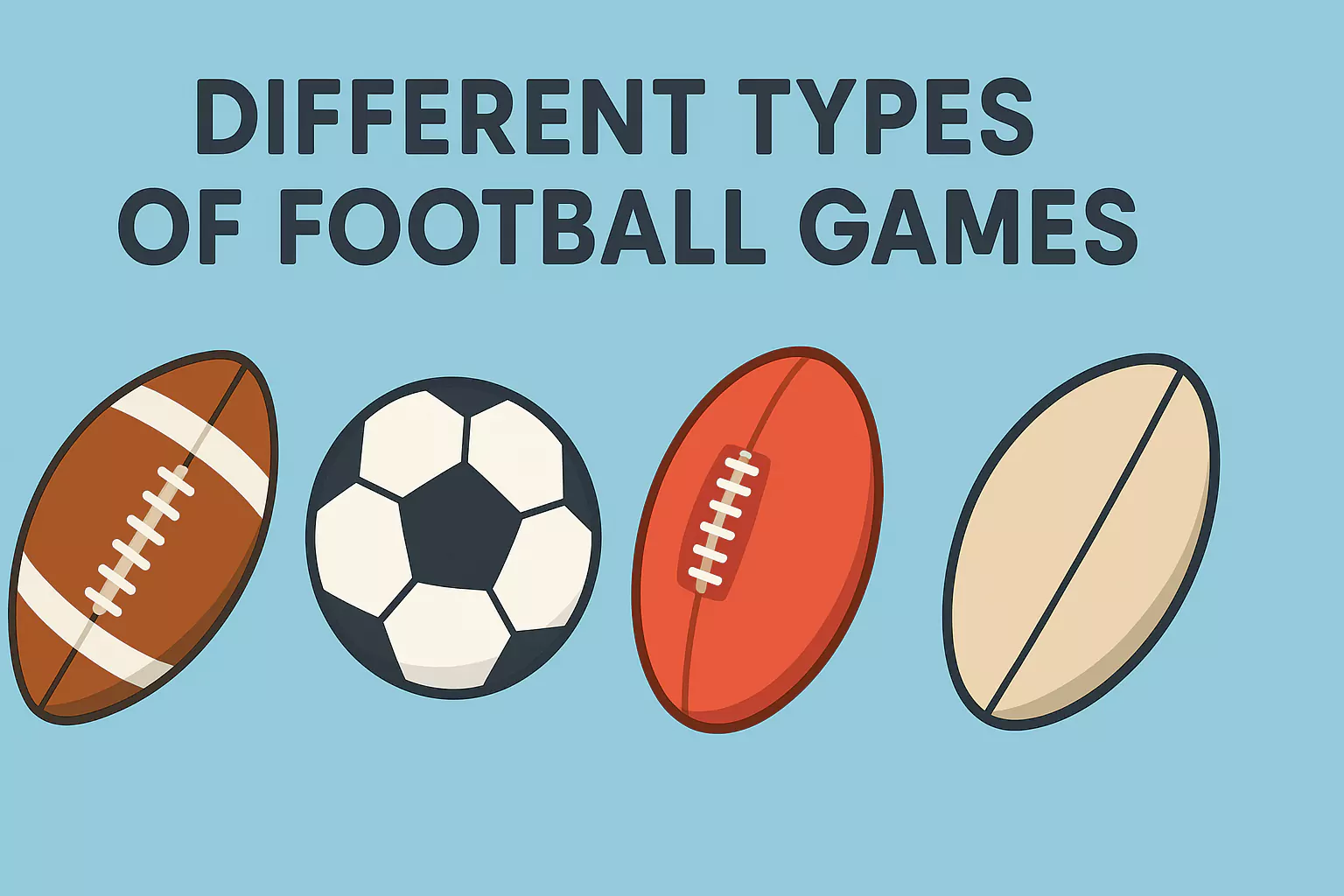
I’ve always believed that football isn’t just one game—it’s a world of games. Growing up, I remember calling it “football” while my cousin from the U.S. called it “soccer,” and my friend from Australia had his own version altogether. That curiosity drove me to dig deeper into how one word—football—could mean so many different things depending on where you are. And that’s exactly what I want to explore in this article.
As someone who’s spent years researching football history, rules, and regional game styles, I’ve come to appreciate just how rich and varied the sport really is. From the helmet-clashing tackles of American football to the high-paced kicking finesse of association football (what most of the world calls soccer), each version tells its own story.
This guide is your go-to breakdown of the different types of football games played around the globe. Whether you’re a die-hard NFL fan, a weekend soccer player, or just curious about what makes rugby or Australian rules football unique, I’ve got you covered. I’ll walk you through the most popular types, their rules, gameplay styles, cultural roots, and what makes each one specials
A quick comparison chart of football types by region
| Football Type | Region | Main Characteristics |
|---|---|---|
| American Football | North America | Contact sport, 11 players per side, NFL as the major professional league. |
| Flag Football | Worldwide (popular in schools) | Non-contact, players wear flags to avoid tackles. |
| Association Football (Soccer) | Worldwide (most popular globally) | 11 players per side, non-contact, uses a round ball. |
| Australian Rules Football | Australia | Contact sport, oval field, 18 players per team. |
| Rugby (Union/League) | United Kingdom, Australia, New Zealand, South Africa | Contact sport, 15 players per side (Union), 13 players (League). |
| Gaelic Football | Ireland | A mix of soccer and rugby, 15 players per side, played with a round ball. |
By the end of this read, you’ll have a full understanding of why football is more than a sport—it’s a global language with many dialects. And who knows? You might even discover a new favorite version to watch or play.
Contents
- 1 What Does “Football” Mean in Different Countries?
- 2 Association Football (Soccer)
- 3 American Football
- 4 Rugby Football
- 5 Australian Rules Football
- 6 Association Football (Soccer)
- 7 Canadian Football
- 8 Gaelic Football
- 9 Rugby Football
- 10 Arena Football
- 11 Flag Football
- 12 Fantasy Football
- 13 Conclusion: Football’s Endless Variety
What Does “Football” Mean in Different Countries?
Here’s something that confused me for years when I first started researching football globally—why does the word “football” mean something totally different depending on where you are?
In most countries, football means what Americans call soccer. But head over to the U.S., and football is a completely different game—with helmets, shoulder pads, and touchdowns. Meanwhile, if you’re in Australia, football might mean Aussie Rules, and in Canada, it’s closer to American football but with a twist.
Let me break it down simply:
- In the United Kingdom and most of Europe, “football” is the game governed by FIFA, played with a round ball, and primarily using feet. That’s soccer to Americans.
- In the United States, football refers to a physical, strategic game played with an oval ball. It’s governed by organizations like the NFL and NCAA.
- In Australia, football usually means Australian Rules Football, a unique sport with its own rules, field, and style.
- In Canada, “football” typically refers to Canadian football, which is governed by the CFL.
The same word—football—but different worlds. Understanding this difference is the first step to really appreciating the range of football games out there.
Association Football (Soccer)
History and Global Dominance
Soccer, or what I personally grew up calling football, is the most played sport in the world. The game’s roots go back centuries, but the modern version was shaped in England during the 1800s. The Football Association was formed in 1863, which standardized the rules we still use today.
From humble local matches to global tournaments like the FIFA World Cup, soccer has become a universal language. Over 250 million players in more than 200 countries play this form of football. That’s massive reach—no other version of the game comes close.
Key Rules and Gameplay
What makes association football so loved is how simple it is to start. All you need is a ball and a few friends. The game has:
- 11 players per team
- Two halves of 45 minutes
- No hands allowed—except the goalkeeper
- Scoring by kicking the ball into the opponent’s goal
It’s played on a rectangular field with goals at each end. And it’s governed by a universal set of rules known as the Laws of the Game.
Popular Leagues and Countries
Some of the world’s biggest sports leagues are soccer leagues. Personally, I never miss a Premier League weekend—it’s fast, passionate, and full of drama.
Here are some top leagues:
- English Premier League (EPL)
- La Liga (Spain)
- Serie A (Italy)
- Bundesliga (Germany)
- Major League Soccer (USA/Canada)
And when it comes to international tournaments, nothing beats the FIFA World Cup, UEFA Champions League, or Copa América.
American Football

How It Evolved in the U.S.
American football has a fascinating history. It started out as a mix of soccer and rugby played in colleges during the late 1800s. Over time, it became its own game with new rules, strategies, and gear. The big shift came when Walter Camp—often called the “Father of American Football”—introduced key rules like the line of scrimmage and the down system. You can read more about his role on Britannica’s page.
What I find most interesting is how much this game became part of American culture. From Friday night high school games to Super Bowl Sunday, football in the U.S. is more than a sport. It’s a ritual, a celebration, and sometimes, a family tradition.
It’s governed at the professional level by the NFL (National Football League), which is the most watched sports league in the country. In fact, the Super Bowl often draws over 100 million viewers each year.
Game Format and Unique Elements
When I first watched American football, I was blown away by the complexity. It’s not just about strength. It’s like a physical chess match with bursts of action and deep strategies behind every move.
Here’s how it works in simple terms:
- 11 players per team on the field
- Four quarters of 15 minutes each
- Objective: Move the ball into the end zone for a touchdown (6 points)
- Use of hands and physical blocking is allowed
- Strategic play-calling and timed downs (four tries to move 10 yards)
Each team has separate units: offense, defense, and special teams. This separation is one reason why football coaches are seen as masterminds—they have to manage all three.
One unique feature is the playbook, a set of strategic plans and formations used during games. Trust me, learning even a few plays feels like studying for an exam.
Comparison of Key Rules – American Football vs. Association Football
| Rule/Aspect | American Football | Association Football (Soccer) |
|---|---|---|
| Number of Players | 11 players per side | 11 players per side |
| Game Duration | 4 quarters, 15 minutes each | 2 halves, 45 minutes each |
| Field Dimensions | 120 yards long, 53.3 yards wide | 100-130 yards long, 50-100 yards wide |
| Ball Type | Oval-shaped, inflated leather ball | Round, inflatable ball |
| Objective | Score touchdowns (6 points), field goals (3 points) | Score goals (1 point) by getting the ball in the opponent’s net |
| Contact Level | High contact (tackling, blocking) | Low contact (only incidental physical contact allowed) |
| Offside Rule | Offside applies only to forward passes | Offside applies to players ahead of the ball when passed |
| Timeouts | Yes, teams are allowed timeouts | No timeouts during play |
| Substitutions | Limited (3 per team) | Unlimited substitutions in most leagues (3-5 in some competitions) |
| Scoring | Touchdown (6 points), Field Goal (3 points), Extra point (1-2 points) | Goal (1 point) |
Rugby Football
Different Variants: Union vs. League
Rugby was actually one of the earliest branches of football, and it has two main versions: Rugby Union and Rugby League. While they look similar at first glance, there are key differences that make each version unique.
I first got hooked on rugby while watching the Rugby World Cup. The energy, the power plays, the lack of pads—this was football at its rawest.
Here’s the main difference between the two:
- Rugby Union has 15 players per team, contested scrums, and a focus on rucks and mauls.
- Rugby League has 13 players, faster pace, and a six-tackle rule (sort of like downs in American football).
The choice between Union and League often comes down to region. Union is big in England, South Africa, and New Zealand. League has a strong following in northern England and parts of Australia.
Gameplay Structure and International Presence
One thing I admire about rugby is how continuous it feels. Unlike American football, where the play stops often, rugby just keeps going. The only real pauses are for penalties, scrums, or injuries.
Gameplay basics include:
- Scoring a try (5 points) by grounding the ball in the opponent’s in-goal area
- Conversions (2 points), penalty kicks (3 points), and drop goals (3 points)
- Passing only backward or sideways—no forward passes allowed
- Tackling is allowed but must follow strict safety rules
Rugby has a huge international scene. The Rugby World Cup is one of the biggest sporting events in the world, attracting teams from all continents. Countries like New Zealand (home of the famous All Blacks), England, and South Africa dominate the stage.
Australian Rules Football
How It’s Played Down Under
The first time I saw Aussie Rules Football, I was hooked. It’s fast, physical, and played on a massive oval field—way bigger than anything I’d seen in American or rugby football. Known locally as “footy,” this game is a national obsession in Australia.
The game was developed in Melbourne in the mid-1800s as a way to keep cricketers fit during the off-season. Today, it’s governed by the AFL (Australian Football League), which draws millions of fans across the country.
Here’s the setup:
- 18 players per team on the field
- Played on a cricket oval—up to 185 meters long
- Matches are divided into four quarters of 20 minutes
- The ball can be kicked, handballed (punch-passed), or carried
- You score by kicking the ball between tall goalposts
What I love most is the freedom of movement. There are no offsides, and players run for miles in a single match. It’s like soccer, basketball, and rugby had a super-athletic baby.
If you’re curious about the gear or basic rules, the official AFL website offers an easy-to-follow guide.
Field Layout and Scoring System
The field layout in Aussie Rules is unique. It’s not rectangular like most football fields. Instead, it’s shaped like an egg. That means players need serious stamina and spatial awareness.
Scoring works like this:
- 6 points for a goal (ball kicked through the center goalposts without being touched)
- 1 point for a behind (ball passes between a goal and behind post or is touched before passing through)
Umpires use signature hand signals to indicate scores, and believe me, it takes a bit to learn what they all mean. But once you get the hang of it, the game flows beautifully.
Association Football (Soccer)
The World’s Most Popular Sport
Let’s be honest—when most people say “football,” they mean soccer. It’s the most played and watched sport in the world. Over 250 million people play it globally, and it has the biggest fan base of any sport. Just think of events like the FIFA World Cup, which pulls in billions of viewers.
Soccer has simple rules, a round ball, and endless drama. I grew up watching the World Cup with my family, yelling at the screen during penalty shootouts. The passion is unreal.
What’s interesting is how every country plays it with its own flair. Brazil is known for skill, Germany for discipline, and England for its rich club culture. The top leagues like the English Premier League and La Liga are followed worldwide.
Basic Rules and Key Competitions
Soccer is easy to pick up. That’s part of the magic. All you need is a ball, an open space, and a few friends. I’ve seen kids playing barefoot in alleys with nothing but rocks for goalposts—and the joy on their faces was the same as any pro on TV.
Here’s how it works:
- 11 players per side, including the goalkeeper
- Matches last 90 minutes, split into two halves
- Only the goalkeeper can use their hands
- You score by getting the ball into the opponent’s goal
- Offside, fouls, yellow and red cards all shape the flow of the game
There are hundreds of leagues and competitions, but a few are must-watch:
- FIFA World Cup – every four years, the ultimate showdown
- UEFA Champions League – best clubs in Europe compete
- Copa América and AFCON – showcase top talent from South America and Africa
One thing I admire most about soccer is how it connects people. Whether you’re in Nairobi or Naples, a ball and a dream go a long way.
Canadian Football
How It Differs from American Football
If you’ve ever watched Canadian Football League (CFL) games like I have, you’ll notice right away that it’s similar to American football—but with some major twists. The first time I tuned into a Grey Cup game, I thought, “Wait, why are there only three downs?”
Here’s what makes it stand out:
- 12 players per side instead of 11
- The field is larger: 110 yards long and 65 yards wide
- Three downs to make 10 yards, not four
- 20-second play clock, which keeps the pace faster
- The end zones are deeper—20 yards instead of 10
These changes make Canadian football more dynamic. There’s less time to think, and more emphasis on passing plays and open space. It reminds me of a faster-paced chess match where every move counts.
I remember once watching a CFL game where the ball was kicked into the end zone and no one touched it—guess what? The kicking team got a single point. It’s called a “rouge,” and it’s one of the unique scoring rules that surprises even longtime American football fans.
Gaelic Football
Ireland’s Fast and Furious Hybrid
Gaelic football was something I stumbled onto while researching global football styles—and wow, it blew me away. It’s like a mix of soccer, rugby, and basketball, all rolled into one lightning-fast sport. If you’ve never seen a GAA match, I highly recommend checking one out.
It’s played mostly in Ireland and is a huge part of Irish culture. I learned that most players are amateurs who play out of love for the game and community pride. That fact alone made me respect it even more.
Here’s how the game flows:
- 15 players per team on a rectangular grass pitch
- Players can kick, punch, or carry the ball
- A goal scored into the net is worth 3 points, and a point over the crossbar is worth 1
- Games are made up of two 30-minute halves
- Players must bounce or solo the ball every 4 steps
What’s “soloing”? It’s a skill where you drop the ball onto your foot and kick it back into your hands. It’s not easy! I tried it once during a local sports workshop, and let’s just say the ball didn’t come back.
The passion in the crowd, the tradition, and the raw pace make Gaelic football unforgettable.
How Gaelic Football Compares to Other Styles
One of the coolest things about Gaelic football is how it blends skills from other games. You’ll see soccer-style footwork, rugby-style tackles, and basketball-like passing moves. It’s incredibly versatile and keeps both fans and players on their toes.
For example:
- No offsides rule, which allows more freedom
- The goals look like a mix between rugby posts and soccer goals
- Players wear minimal protective gear, relying more on agility and timing
You might also be surprised to learn that the sport is run by a volunteer-based organization, the Gaelic Athletic Association (GAA), which promotes traditional Irish games across the world.
Rugby Football
Where Football Really Got Its Start
When I started digging into the roots of modern football, I quickly realized how important rugby football is in the family tree. Many people don’t know this, but rugby is one of the oldest and most influential sports in the football world.
There are two main types: Rugby Union and Rugby League. Both are played with an oval ball, full contact, and a focus on tackling, passing, and scoring tries (which are like touchdowns). But there are some key differences too.
- Rugby Union has 15 players per team, while League has 13
- Union games last 80 minutes, split into two halves
- In Union, teams contest possession more during breakdowns, like rucks and mauls
- League is a bit faster and simpler, with fewer stoppages
I’ve watched both versions over the years, and they each have their charm. Union feels like a gritty battle of strategy, while League is all about speed and power.
What amazes me most is that players don’t wear much protective gear. No helmets. No heavy padding. Just a mouthguard and some tough-as-nails spirit. It’s raw, and honestly, pretty thrilling to watch.
How Rugby Shaped Modern Football
Now here’s the cool part—rugby football played a big role in shaping American football. Back in the 1800s, schools like Harvard and Yale were playing something close to rugby. Over time, they added new rules like the forward pass and the down system, which led to the gridiron version we know today.
Even some football terms like “try,” “scrum,” and “lineout” still echo in rugby circles. In fact, watching a rugby scrum unfold is like seeing a coordinated power push—it really reminds me of how offensive lines clash at the start of a football play.
I think understanding rugby gives you a deeper love for how football evolved. It’s like finding out where your favorite recipe came from—it makes you appreciate the flavors even more.
Arena Football
Football Turned Up to 11 Indoors
If you’ve never seen arena football, you’re in for a wild ride. The first time I watched it, I felt like someone had taken regular football, packed it into a tight space, and turned up the volume.
Arena football is played indoors on a much smaller field—just 50 yards long, half the length of a standard football field. The game is fast, high-scoring, and loud. It almost feels like football crossed with hockey and basketball.
Here’s what makes it pop:
- 8 players per team, not 11
- The field is surrounded by rebound walls
- Shorter play clock, so things move quickly
- Scoring is off the charts—final scores can look like basketball games
- Players often play both offense and defense, which is rare in outdoor football
I once attended a local arena football game, and I can still hear the echo of the fans cheering as a receiver flipped over the wall mid-play. It’s nonstop action, and you barely have time to blink.
Flag Football
Non-Contact, Full Action
Flag football is where you get all the fun of football, minus the heavy hitting. I’ve played a lot of flag football myself, and it’s honestly a great way to enjoy the sport without the worry of getting tackled.
The rules are simple: Instead of tackling an opponent to the ground, you “capture” their flag, which hangs from their belt. It’s fast-paced and requires quick thinking, speed, and sharp strategy.
- 6-8 players per team
- Smaller field, typically around 30-50 yards
- No contact allowed—just flags
- Often played in recreational leagues or casual games with friends
I remember playing a few games where we had to make strategic passes or fakes to get around the defense. It taught me how to read plays faster, and how to move quickly without getting hit.
The Appeal of Flag Football
What makes flag football stand out is how inclusive it is. People of all ages, genders, and skill levels can jump into the game. Whether it’s a family event or a competitive league, you get the thrill of the game with much less risk. I’ve seen kids and adults alike having fun in local leagues, and the energy is contagious.
Flag football also serves as an entry point for kids and newcomers to get a feel for the sport. It’s a perfect way for them to build their understanding of football rules and teamwork before jumping into full-contact play.
Fantasy Football
Football Meets Strategy
Fantasy football is like being the general manager of your own football team. For years, I’ve been obsessed with fantasy leagues—drafting players, managing rosters, and watching my team compete week by week. It’s a fun and strategic way to be involved in the NFL season beyond just watching games.
Each player you draft earns points based on their performance during real games. If they score touchdowns, gain yards, or make big plays, you rack up points. It’s all about creating the best lineup of players and staying on top of the NFL season.
How to Get Started with Fantasy Football
If you’re thinking about diving into fantasy football, here’s a quick rundown of how it works:
- You draft players to build your team
- Players score points based on real-world stats (touchdowns, yards, receptions, etc.)
- You face off against other teams in a league
- Weekly matchups determine who wins based on how well players perform in real games
- There are trade options to improve your team as the season progresses
I’ve found that one of the most enjoyable parts of fantasy football is the community aspect. Whether it’s talking strategy with friends or seeing how different team setups perform, there’s always something new to learn and explore. It keeps you engaged with the entire NFL season, and it’s a great way to connect with others who share the same passion.
For beginners, platforms like ESPN Fantasy or Yahoo Fantasy are fantastic to start with.
Conclusion: Football’s Endless Variety
So Many Ways to Play the Game
As we’ve seen, football isn’t just about one type of game. From the hard-hitting action of NFL football to the strategic depth of fantasy football, there’s a version of the game for everyone. Whether you’re on the field playing flag football with friends, following the big league games, or competing in your own fantasy league, football has something to offer.
The beauty of football lies in its variety. Every version—whether it’s rugby, arena football, or fantasy football—brings its own flavor and excitement to the table. What unites all these forms is the passion, the strategy, and the love of the game.
If you’re just getting started, or if you’re already a seasoned fan, there’s always more to learn and enjoy in the world of football. Who knows? You might find a new favorite type of the game to follow or even play.
Thanks for following along with me as I’ve shared my journey through these different types of football. It’s always great to dive deeper into a sport I’ve loved for years and share that passion with fellow fans. Football really is a universal language.
Now, it’s your turn: what’s your favorite type of football? Are you a fan of the NFL, a flag football enthusiast, or a fantasy football pro? Let me know in the comments below—I’d love to hear your thoughts!
