
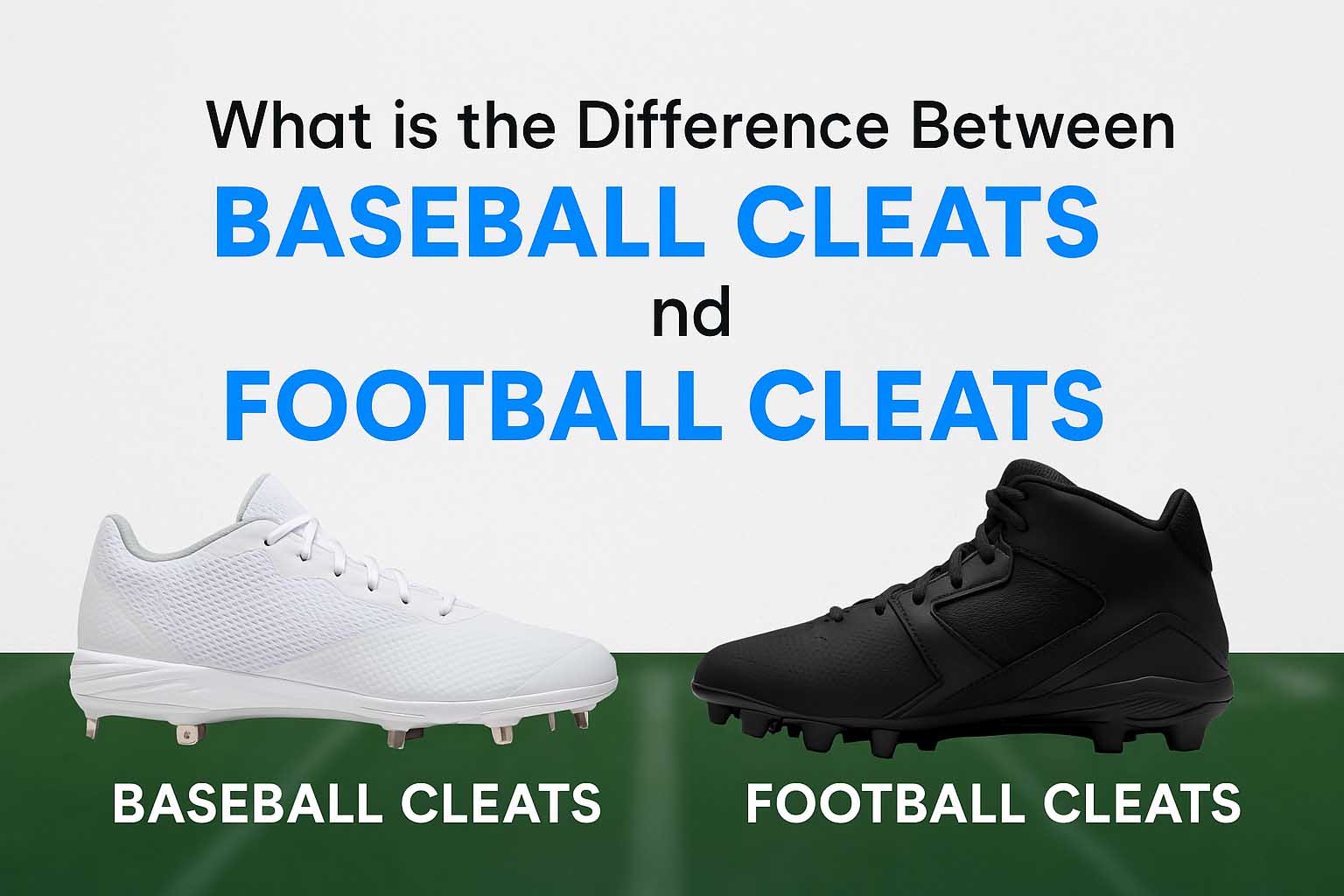
If you’ve ever stepped onto a baseball diamond or a football field, you know that having the right gear can make all the difference. And when it comes to cleats, it’s not just about looking good—it’s about performance, safety, and comfort.
I’ve seen plenty of athletes make the mistake of thinking cleats are interchangeable. But trust me, baseball and football cleats are designed with specific movements, surfaces, and game mechanics in mind. Wearing the wrong pair could throw off your game or, worse, put you at risk for injury.
In this guide, I’ll break down the key differences between baseball cleats and football cleats. We’ll go over their design, purpose, and how they impact your performance on the field. By the end, you’ll know exactly which pair is right for you.
Contents
Key Differences Between Baseball Cleats and Football Cleats

If you hold a baseball cleat in one hand and a football cleat in the other, the differences are obvious. Each is built for the demands of its sport. Let’s break it down.
Comparison Table of Features
| Feature | Baseball Cleats | Football Cleats |
| Cleat Type | Usually metal or molded plastic | Always molded plastic or detachable studs |
| Stud Pattern | Spikes positioned for quick lateral movement | Studs designed for grip and stability |
| Ankle Support | Mostly low-cut for speed | High, mid, and low-top options |
| Weight | Lightweight for fast movement | Heavier for impact protection |
| Purpose | Designed for sudden stops and quick pivots | Made for traction, cutting, and tackling |
Now, let’s dive deeper into what makes each type unique.
Baseball Cleats: Features & Benefits
Baseball is all about speed, sharp turns, and explosive movement. That’s why baseball cleats are designed for quick acceleration and traction.
Metal vs. Molded Cleats
Baseball players often choose between metal and molded cleats. Metal spikes dig into the dirt, offering better grip, especially on dry fields. But they can be risky on hard surfaces. Molded cleats are safer and more durable, making them a great option for younger players.
Cleat Positioning for Lateral Movement
Unlike football, baseball involves short sprints and quick pivots. That’s why baseball cleats have spikes under the toes and ball of the foot. This helps with traction when running bases or fielding grounders.
Lightweight Design for Speed
Baseball cleats are usually lighter than football cleats. Less weight means faster reaction times, whether you’re stealing a base or diving for a catch.
Regulation Guidelines
Different leagues have rules about cleats. For example, metal cleats aren’t allowed in many youth leagues. Always check the rules before buying a pair.
Football Cleats: Features & Benefits
Football is a high-contact sport with constant running, cutting, and tackling. Football cleats provide the grip, support, and protection players need on the field.
High-Top, Mid-Top, and Low-Top Cleats
Football cleats come in three styles:
- High-top cleats – Best for linemen and players needing extra ankle support. These reduce the risk of ankle injuries but can slow movement.
- Mid-top cleats – A balance between speed and support. They work well for running backs, linebackers, and mobile quarterbacks.
- Low-top cleats – The lightest option, built for speed and agility. Wide receivers and defensive backs often prefer these.
Stud Layout for Grip on Turf and Grass
Football cleats have shorter, rounder studs than baseball cleats. The goal isn’t just traction—it’s stability. The stud layout helps players change direction quickly without slipping, whether they’re cutting across the field or pushing off a defender.
Extra Padding for Foot Protection
Football involves a lot of contact, so cleats have thicker padding than baseball cleats. This helps absorb impact and reduces foot injuries during tackles.
How Cleats Enhance Stability in Football Movements
Football players make sudden stops and explosive starts. Their cleats prevent slipping, whether sprinting down the field or holding ground in a tackle. The right cleats give better balance, reducing the risk of ankle and knee injuries.
Choosing the Right Cleats for Your Sport
Wearing the wrong cleats isn’t just uncomfortable—it can be dangerous. Here’s what to consider when picking the right pair.
Why Wearing the Wrong Cleats Can Be Dangerous
Each sport has different movements. Baseball cleats aren’t made for the heavy impact of football, and football cleats don’t support the quick pivots of baseball. Wearing the wrong cleats can lead to:
- Slipping on the field – Baseball cleats may not grip well on a football field.
- Ankle or knee injuries – Football cleats are heavier and can restrict movement in baseball.
- Faster wear and tear – Using the wrong cleats on the wrong surface will wear them out quickly.
Performance Impact of Sport-Specific Cleats
A good pair of cleats improves performance. Baseball cleats help with quick cuts, sprinting, and grip on dirt. Football cleats give better traction, stability, and protection. The right cleats let you play your best.
How to Determine the Right Fit
Finding the perfect fit is key. Here’s how to make sure your cleats feel great:
- Try them on with game socks – This ensures they fit how they will during play.
- Walk and jog in them – You shouldn’t feel tight spots or slipping.
- Check league rules – Some leagues don’t allow metal cleats.
Football vs. Baseball Cleats: Pros and Cons
Choosing between baseball and football cleats isn’t just about the sport—it’s about comfort, performance, and safety. Each type has strengths and weaknesses. Let’s compare.
Pros & Cons Table for Each Cleat Type
| Feature | Baseball Cleats | Football Cleats |
| Traction | Strong grip on dirt and grass | Good grip on turf and grass |
| Weight | Lightweight for speed | Heavier for support |
| Ankle Support | Minimal support, mostly low-cut | High, mid, and low-top options |
| Durability | Wears out faster on turf | Designed for tough contact play |
| Comfort | Flexible for quick pivots | Extra padding for impact protection |
| Versatility | Not ideal for other sports | Can be used for some other field sports |
Now, let’s break these down in more detail.
Comfort and Durability Comparison
Baseball cleats are lightweight and flexible, making them great for fast movements. But they can wear out quickly, especially on artificial turf.
Football cleats are heavier but tougher. They last longer because they’re built for high-contact play. The added padding also makes them more comfortable for long games.
Price Differences and Affordability
Prices vary based on brand, material, and design. Football cleats tend to cost more because of extra padding and ankle support. Baseball cleats are often cheaper, but metal spikes can add to the cost.
Availability for Youth and Adult Players
Both types of cleats come in youth and adult sizes, but options vary. Some youth leagues don’t allow metal cleats, limiting choices for young baseball players. Football cleats offer more styles, giving players a better chance to find the perfect fit.
FAQs
Choosing the right cleats can be confusing. Here are answers to common questions to help clear things up.
Can you wear baseball cleats for football?
No, and you shouldn’t try. Baseball cleats don’t have the right traction for football. They also lack the ankle support needed for cutting and tackling.
Are metal cleats allowed in football?
No. Metal cleats are banned in football for safety reasons. They could cause serious injuries during tackles.
What’s the best cleat type for beginners?
For baseball, beginners should start with molded cleats because they’re safer and more durable. For football, mid-top cleats offer a good balance of support and mobility.
How do I break in new cleats faster?
- Wear them around the house for short periods.
- Use thick socks to stretch them slightly.
- Apply warm water to soften the material.
- Practice in them before game day.
Do baseball cleats last longer than football cleats?
It depends on how often you play. Baseball cleats wear out faster on turf, while football cleats last longer due to their tough build.
Conclusion
Choosing the right cleats isn’t just about rules—it’s about performance, safety, and comfort. Baseball and football cleats serve different purposes, and wearing the wrong pair can affect how you play.
Baseball cleats are lightweight and built for speed. They help with quick cuts, sprinting, and gripping dirt. Football cleats offer more ankle support and padding, giving players the stability they need for tackles and sudden movements.
If you’re serious about your sport, get the right cleats. It’ll improve your game, keep you safe, and help your cleats last longer.
Final Tips for Picking the Right Cleats
- Play baseball? Go for molded or metal cleats based on league rules.
- Play football? Pick high, mid, or low-top cleats depending on your position.
- Need long-lasting cleats? Football cleats are more durable, but baseball cleats are lighter.
What to Do Next
Still unsure? Visit a sports store and try both types on. Walk, jog, and test them out. A good fit will feel natural, not tight or loose.
If this guide helped, share it with your teammates! Got questions? Drop them in the comments—I’d love to help.
