
Cleats play a big role in sports. They help players move better on the field. Whether you’re running, stopping, or turning, the right cleats give you grip and control. But not all cleats are the same. Soccer and football cleats have key differences that affect how they perform.
If you wear the wrong cleats, you might slip, lose speed, or even get hurt. That’s why knowing the difference matters. The right cleats can boost your game and keep you safe. In this guide, I’ll break down everything you need to know.
Quick Comparison of Soccer vs. Football Cleats
| Feature | Soccer Cleats | Football Cleats |
| Stud Pattern | Evenly spread for balance | Toe stud for extra push-off |
| Ankle Support | Low-cut for agility | High-cut for protection |
| Weight | Lightweight for speed | Heavier for stability |
| Flexibility | More flexible for ball control | Stiffer for foot protection |
1. Key Design Differences
Stud Patterns and Traction
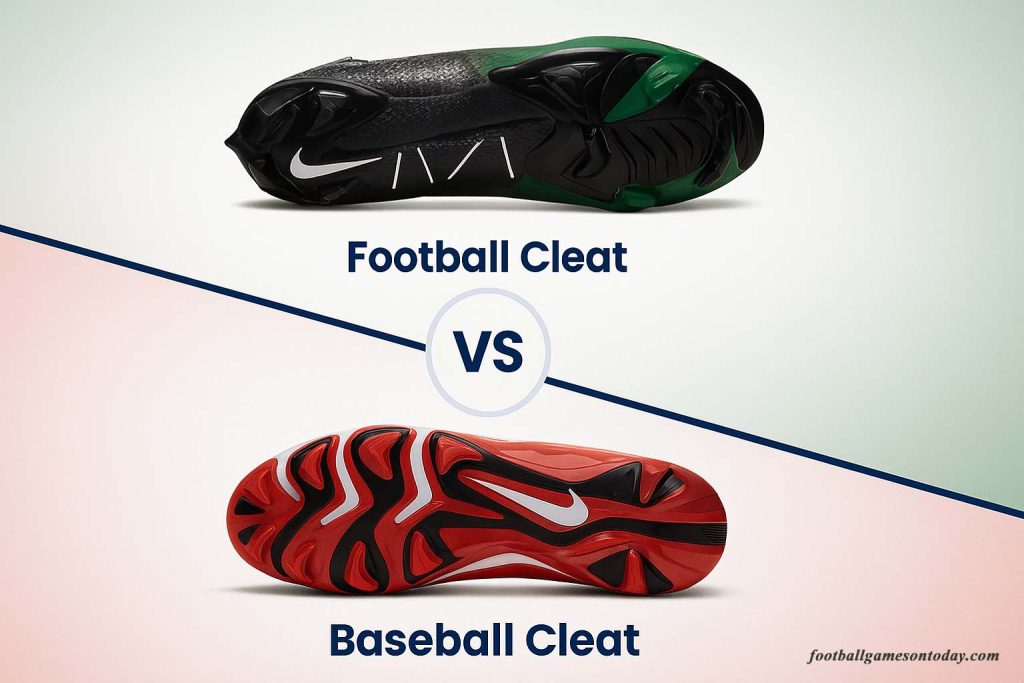
Studs are the small spikes under the cleats. They give traction so players don’t slip. Soccer cleats have evenly spread studs. This helps with quick movements in all directions. Football cleats have a front toe stud. It helps players push forward when sprinting or tackling.
Ankle Support and Structure
Soccer players need speed and control. Their cleats have a low-cut design. This lets the ankles move freely. Football cleats come in different cuts—low, mid, and high. High-cut cleats give extra ankle support, which is important for linemen who need stability.
Weight and Flexibility Differences
Soccer cleats are light and flexible. They help players run fast and control the ball. Football cleats are heavier. They give extra protection, especially for players who make tackles or block opponents.
2. Surface and Performance Factors
Cleats are designed to work best on certain surfaces. Choosing the right cleats for the right field improves performance and reduces injury risks.
How Cleats Interact with Different Playing Surfaces
The field type affects traction, balance, and comfort. Soccer and football cleats perform differently based on where the game is played.
- Natural Grass: Both soccer and football cleats work well on grass. Soccer cleats have shorter, evenly placed studs for quick movements. Football cleats, especially those with a toe stud, provide extra grip when pushing off.
- Artificial Turf: Turf is harder than grass, which changes how cleats perform. Soccer cleats for turf have smaller, rubberized studs to prevent slipping. Football cleats on turf may cause more stress on the feet due to their heavier structure.
- Indoor Surfaces: Indoor soccer cleats have flat soles. They give grip without damaging the floor. Football cleats are not designed for indoor use, as they rely on studs for traction.
3. Rules and Regulations
Each sport has rules about cleats to ensure safety and fair play. Wearing the wrong cleats can lead to penalties or injuries.
Soccer Cleat Regulations
- Soccer cleats must not have a front toe stud. This rule prevents dangerous contact with other players.
- The studs should be short and evenly spaced to allow for quick foot movement.
- Metal studs are allowed in some leagues but are banned in youth and recreational soccer.
Football Cleat Restrictions
- Football cleats can have a front toe stud. It helps with traction when sprinting or blocking.
- Different positions require different cleat styles. Linemen often wear high-top cleats for ankle support, while wide receivers prefer low-cut cleats for speed.
- Some leagues have restrictions on metal cleats for player safety.
4. Comfort, Fit, and Player Preference
Cleats are not just about grip—they also impact movement, speed, and comfort. Finding the right fit can make a huge difference in performance.
How Each Cleat Type Affects Movement
Soccer and football require different types of movement. That’s why their cleats are built differently.
- Soccer Cleats: Designed for quick footwork, dribbling, and sudden changes in direction. They are lightweight and allow for smooth contact with the ball.
- Football Cleats: Built for stability, traction, and explosive movements. They provide better ankle support, especially for positions that involve tackling or blocking.
Which Cleats Are Better for Speed, Agility, and Stability?
- Speed: Soccer cleats are lighter, making them ideal for sprinting. Football cleats can be heavier, but some low-cut models help players run faster.
- Agility: Soccer cleats win here. They allow for sharp turns and quick lateral movements.
- Stability: Football cleats provide more ankle support, which helps with balance and control on the field.
Best Cleats for Soccer and Football by Category
| Category | Best for Soccer | Best for Football |
| Speed | Adidas X Speedportal | Nike Vapor Edge |
| Agility | Nike Mercurial Superfly | Under Armour Spotlight |
| Stability | Puma Future Z | Adidas Freak |
| Best Overall | Nike Phantom GX | Nike Alpha Menace Elite |
5. Pricing and Brand Differences
Cleats come in different price ranges. The cost depends on materials, technology, and brand reputation.
Cost Comparison of Soccer vs. Football Cleats
- Soccer Cleats: Generally cost between $50-$300. High-end models use premium materials for comfort and durability.
- Football Cleats: Range from $60-$350. Extra padding and ankle support can drive up the price.
Top Brands Specializing in Each Type
- Soccer Cleat Brands: Nike, Adidas, Puma, Mizuno
- Football Cleat Brands: Nike, Under Armour, Adidas, Jordan
6. Can You Use Soccer Cleats for Football and Vice Versa?

It’s tempting to use one pair of cleats for both sports, but is it a good idea?
Potential Advantages and Disadvantages
✔ Advantages:
- Soccer cleats are lighter, which may help skill positions in football.
- Football cleats offer more stability, which can help on wet or uneven fields.
✖ Disadvantages:
- Football cleats with a toe stud can be dangerous in soccer.
- Soccer cleats may not provide enough ankle support for football players.
Situations Where Crossover Is Acceptable
- If you play recreational football, soccer cleats can work.
- If you’re a kicker in football, soccer cleats might be a better choice for accuracy.
Frequently Asked Questions (FAQs)
1. Can I wear football cleats for soccer?
No, I wouldn’t recommend it. Football cleats have a front toe stud, which soccer cleats don’t have. This extra stud can be dangerous because it might get stuck in the ground, increasing the risk of tripping or injury.
Football cleats are also bulkier, which can make it harder to control the ball. Soccer cleats are designed for quick movements and better touch. If you’re playing soccer, it’s best to use the right cleats for safety and performance.
2. Why do soccer cleats lack a front toe stud?
Soccer cleats don’t have a front toe stud because players need to move quickly in all directions. The absence of this stud helps with smooth foot movement, reducing the chance of tripping.
Also, soccer involves a lot of dribbling and passing. A front toe stud would interfere with ball control. That’s why soccer cleats have a flat front, allowing for better precision when kicking or stopping the ball.
3. What happens if I use the wrong cleats for my sport?
Wearing the wrong cleats can affect your performance and safety. Here’s why:
- Less Traction: Football cleats on a soccer field might not grip well, making it harder to change direction quickly.
- Increased Injury Risk: Soccer cleats don’t have the ankle support needed for football. This can lead to injuries, especially in high-contact plays.
- Uncomfortable Fit: Soccer cleats are lighter and more flexible, while football cleats are built for impact. Using the wrong pair can cause discomfort and foot pain.
If you’re serious about your sport, invest in the right cleats. It makes a big difference in how you play and how safe you are.
4. Are there multi-sport cleats available?
Yes, but they’re not ideal for competitive play. Some brands make “all-purpose cleats”, which work for different sports. These are great for casual or beginner players.
However, serious athletes should get sport-specific cleats. Soccer, football, baseball, and lacrosse all have unique needs. A cleat designed for one sport will always perform better than a general one.
5. How do I choose the right cleats for my playing style?
Think about your position and movement on the field:
- Speed players: Choose lightweight cleats like Nike Mercurial (soccer) or Adidas Adizero (football).
- Agility players: Look for flexible soles that allow quick changes in direction.
- Power players: Go for extra ankle support and durability. Football linemen, for example, need mid- or high-top cleats.
Trying on different pairs and testing how they feel is key. Comfort matters as much as performance.
Conclusion
Key Takeaways
- Soccer and football cleats are built for different sports, with unique features for traction, movement, and safety.
- Soccer cleats are lightweight, flexible, and have no front toe stud for better ball control.
- Football cleats offer more ankle support and durability, making them ideal for physical contact.
- The right cleats improve speed, agility, and stability, helping players perform their best.
- Using the wrong cleats can affect comfort, movement, and even lead to injuries.
Which Cleats Should You Choose?
If you play soccer, get soccer cleats. If you play football, get football cleats. It’s that simple. Each pair is made for its sport, ensuring better performance and safety.
However, if you only play casually, you might get away with wearing soccer cleats for football (but not the other way around). Just keep in mind that sport-specific cleats will always work best.
When choosing cleats, think about:
✅ Your position – Speed-focused players need lightweight cleats, while linemen need more support.
✅ Comfort and fit – A snug fit prevents blisters and ensures better movement.
✅ Surface type – Turf, grass, and indoor fields require different cleats.
The right cleats can make a huge difference in how you play. Pick the right pair, and you’ll feel faster, stronger, and more in control on the field.
Would you like to see a comparison of the best cleats available today? Let me know! ⚽🏈
